

There’s a moment that happens when you’re reviewing your banking app and you spot a charge for $12.99 that looks vaguely familiar. You stare at it. “LumiBox Premium”? “StreamVault Plus”? You definitely signed up for something, probably during a free trial six months ago, maybe while half-watching TV. You mentally file it under “deal with later” and keep scrolling.
That small, recurring mystery charge isn’t a budgeting failure. It’s a feature, not a bug, of how modern spending works.
Somewhere in the last decade, ownership quietly became optional. We stopped buying things outright and started renting access to them, one auto-renewal at a time. Movies, music, software, meal kits, razors, LinkedIn premium, cloud storage, meditation apps, and that thing that sends you new socks every quarter.
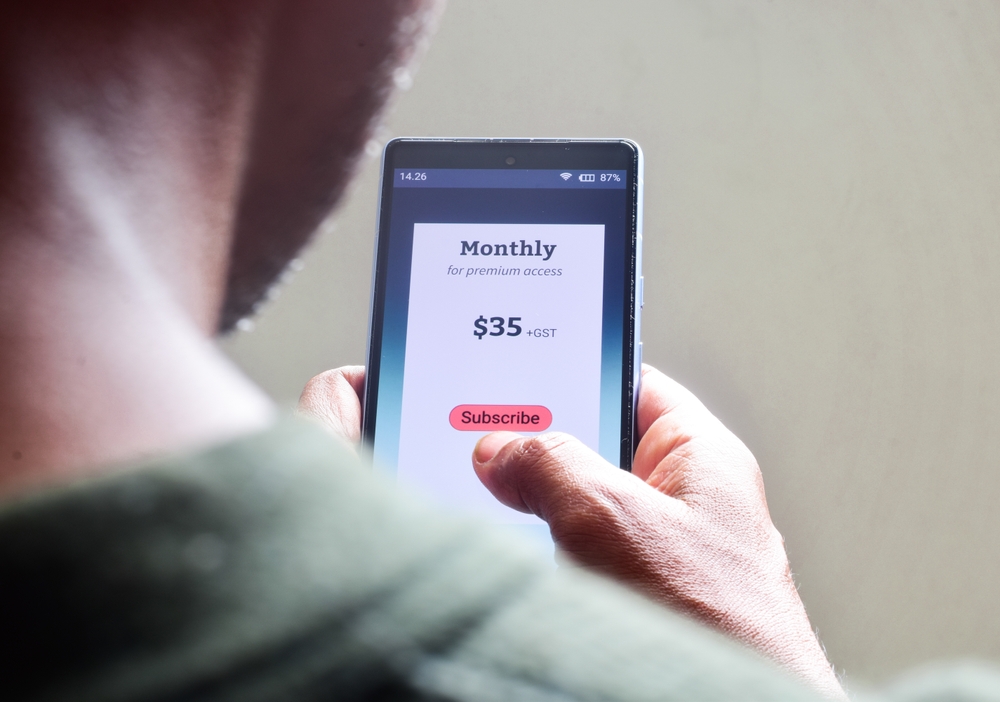
The shift didn’t happen dramatically. No one woke up and decided to subscribe to everything. It accumulated. A streaming service here, a productivity tool there. Each one individually reasonable. Each one promising convenience, flexibility, freedom from commitment. And now, if you’re like most people, you’re paying for somewhere between 10 and 20 subscriptions, many of which you’ve forgotten exist.
This isn’t about whether subscriptions are good or bad. It’s about how they became the default, why they’re designed to disappear from your attention, and what that does to the way you think about spending. Because once everything runs on autopilot, financial clarity stops being about what you buy. It becomes about what you forget you’re still paying for.
How We Got Here
The Netflix Domino Effect
It’s easy to trace subscription culture back to Netflix. In 2007, they introduced streaming as an add-on to their DVD-by-mail service. By 2013, they’d become the model everyone wanted to copy. Why? Because subscriptions solved a problem companies had been trying to crack for years: predictable revenue.
Before subscriptions, businesses had to convince you to buy something new every time. That’s exhausting and expensive. Subscriptions flipped the model. Instead of one big sale, you get a small, recurring relationship. Instead of winning customers over and over, you win them once and keep them on autopilot.
Netflix made this feel like a win for consumers too. Unlimited access for less than the cost of a single DVD. No more late fees. No more deciding whether a movie was worth the rental price. Just a monthly fee that disappeared into the background while you watched as much as you wanted.
It worked so well that everyone else took notes.
The genius was in the psychology. Netflix wasn’t asking you to evaluate individual purchases anymore. There was no decision fatigue about whether a movie was worth $3.99 or $4.99. You paid once, and then everything was “free.” Except it wasn’t free, you were just pre-paying for unlimited access. But it felt free, and that feeling was powerful enough to reshape how an entire generation thought about media consumption.
By the time competitors realized what was happening, Netflix had already trained millions of people to expect this model. Hulu launched. Then Disney+. Then HBO Max, Paramount+, Peacock, Apple TV+. The streaming wars weren’t really about content, they were about who could lock you into the most subscriptions before you noticed you were paying for seven of them.
Software Stopped Being Yours
Adobe was one of the first to make the leap. In 2013, they stopped selling Photoshop as a one-time purchase and moved entirely to Creative Cloud subscriptions. People were furious. Designers who’d been buying new versions every few years suddenly had no choice but to pay monthly, forever, or lose access to the tools they relied on.
But Adobe didn’t blink. They knew the math. A $50/month subscription generates more long-term revenue than a $600 one-time sale. And once enough people were locked in, the outrage faded. Now, paying monthly for software feels normal. Microsoft Office, Google Workspace, Dropbox, Slack, Notion – none of them want you to own anything anymore. They want you on the subscription.
The Physical World Followed
Then it jumped offline. Dollar Shave Club pioneered the idea that you could subscribe to razors. Suddenly, toilet paper, vitamins, dog food, and coffee were all available on recurring delivery. HelloFresh and Blue Apron made dinner a subscription. Rent the Runway did it for clothes. Peloton did it for fitness.
Even cars got into it. You don’t lease a car anymore, you subscribe to one. Some services let you swap models monthly. Why own when you can access?
The logic is always the same: convenience. Let us handle it. One less decision. Set it and forget it.
And we did forget.
What’s remarkable isn’t that subscriptions spread, it’s how quickly they stopped feeling like a choice. Ten years ago, if someone told you that you’d be renting your car, your wardrobe, your morning coffee beans, and the software you use to edit photos, you might have found it dystopian. Now? It’s just normal. The default. The path of least resistance.
Why Subscriptions Are Designed to Feel Invisible
The Frictionless Onboarding
Subscriptions work because they’re engineered to be as easy as possible to start and as annoying as possible to stop.
Getting in is effortless. Free trials don’t even ask for a credit card upfront anymore, they just do. You click “try free for 30 days,” enter your info, and you’re done. There’s no moment where you have to decide whether it’s worth it, because you’re not paying yet. You’ll cancel before the trial ends, obviously.
Except you won’t. Because life happens. Because they don’t send you a reminder. Because the trial quietly converts to a paid subscription and the charge is small enough that it doesn’t trigger an alert.
The “$9.99 Sweet Spot”
There’s a reason so many subscriptions cost $9.99, $12.99, or $14.99. It’s deliberate. These amounts are small enough to feel trivial in isolation, but large enough to add up significantly over time.
A $9.99 charge doesn’t feel like a financial decision. It feels like loose change. But twelve of them is $120 a year. If you have ten subscriptions at that price point, you’re spending $1,200 annually without feeling like you made a major purchase.
The psychological trick is that subscriptions don’t register the same way as lump-sum spending. Paying $120 upfront for a year of something forces you to evaluate whether it’s worth it. Paying $9.99 per month makes it invisible.
Auto-Renewal as the Default
The other trick? Auto-renewal is always opt-out, never opt-in. You have to actively cancel. The default is to keep paying.
| Subscription Type | Often Worth Keeping When… | Consider Reviewing If… |
|---|---|---|
| Streaming Services | You watch content every week and regularly use the platform. | You’re subscribed to multiple services but rarely open one or more of them. |
| Productivity Software | It supports work, school, or a hobby you use consistently. | A free alternative now meets your needs or you rarely use the paid features. |
| Cloud Storage | You actively back up important files or collaborate across devices. | You’re paying for more storage than you actually use. |
| Meal Kits & Grocery Deliveries | They save significant time and reduce takeout or food waste. | Deliveries are frequently skipped or ingredients go unused. |
| Fitness Memberships & Apps | You exercise regularly enough that the cost per use stays low. | Your workouts have shifted elsewhere or usage has become infrequent. |
| Subscription Boxes | You genuinely enjoy and use most items you receive. | Packages accumulate unopened or products go unused. |
| Digital Learning Platforms | You’re actively completing courses or building new skills. | Progress has stalled and you haven’t logged in for several months. |
And canceling is never as easy as signing up. Sometimes you have to dig through account settings. Sometimes you have to call customer service. Sometimes the “cancel” button is hidden behind three submenus and labeled something vague like “manage subscription.”
Companies know this. They’re banking on inertia. Most people don’t cancel because they forget, or because it’s mildly annoying, or because they think they might use it later. So they keep paying. For months. Sometimes years.
What This Does to Your Brain (& Your Money)
Spending Becomes Abstract
When payments are automated, spending stops feeling real. You’re not handing over cash. You’re not even swiping a card. The money just… leaves. Quietly. In the background.
This has a strange psychological effect. Research on payment methods shows that people spend more when transactions are abstracted. Credit cards increase spending compared to cash. Digital wallets increase it even more. Subscriptions take it a step further, because you’re not even making a purchase, you’re just letting something continue.
It’s like the financial equivalent of stuff accumulating in your house. You didn’t actively decide to own all of it. It just… happened.
This is why subscription creep is so insidious. You add one here, one there. Each time, it’s just $9.99. Just one more. And because the previous subscriptions are already invisible, the new one doesn’t register as adding to a growing pile. It’s always just this one, isolated thing.
The “I Might Use It Later” Trap
Even when you’re aware of a subscription you’re not using, it’s hard to cancel. There’s always a voice that says, “But what if I need it next month?”
This is loss aversion at work. You’re not evaluating whether the subscription is currently worth it. You’re weighing the possibility of future regret. What if you cancel and then want to watch that one show? What if you need that cloud storage space? What if you finally get around to using that language-learning app?

So you keep it. Just in case. And the charge keeps hitting.
The Illusion of Flexibility
Subscriptions are marketed as flexible. Cancel anytime! No commitment! But that’s only true in theory. In practice, once you’re subscribed, the effort required to leave is higher than the effort required to stay.
You tell yourself you can cancel later. But later never comes, because later you’ll still be busy, still have the same mild inertia, and the same small charge won’t seem worth the effort.
Financial Clarity Gets Blurry
The cumulative effect is that you lose track of what you’re actually spending. Not because you’re careless, but because the system is designed to make spending invisible.
You might have a general sense that you’re subscribed to “a few things,” but most people significantly underestimate the number and total cost. Studies show that people guess they’re spending around $80/month on subscriptions when the average is closer to $200.
That gap isn’t ignorance. It’s by design.
The Subscription Awareness Toolkit
The Annual Audit
You don’t need a monthly budget breakdown. You just need to know what you’re paying for.
Once a year, pull up your credit card and bank statements for the last three months. Scan for recurring charges. Make a list. Literally write them down or put them in a note on your phone.
Seeing them all in one place does something. It makes the invisible visible. You’ll spot things you forgot existed. You’ll remember free trials you never canceled. You’ll realize you’re paying for two cloud storage services because you switched providers and forgot to cancel the first one.
This isn’t about shame or optimization. It’s just information.
You’ll probably be surprised by what you find. Most people are. Not because they’re financially irresponsible, but because subscriptions are genuinely easy to forget. That meditation app you signed up for during a particularly stressful week in 2022? Still charging you. The premium version of that weather app that seemed useful once? Yep, that too.
The “Would I Sign Up Today?” Test
For each subscription, ask: If I didn’t already have this, would I sign up for it right now?
Not “do I use it sometimes.” Not “might I use it eventually.” Would you actively choose to start paying for it today, knowing what you know?
If the answer is anything other than a clear yes, cancel it. You can always resubscribe later if you actually miss it. But most of the time, you won’t.
Bundle Consciousness
Some subscriptions are worth keeping but could be cheaper. Spotify, Hulu, and other platforms offer student discounts, family plans, or bundles that cost less than paying for things separately.
If you’re paying for multiple streaming services, check if any of them have bundle deals. If you have a family, see if anyone else is paying for the same thing, you could split a family plan and both save money.
This isn’t extreme couponing. It’s just… noticing.
The “Pause” Option
A lot of subscription services now offer a pause feature. Instead of canceling, you can freeze your account for a month or two without losing your data or preferences.

This is useful for things like gym memberships, meal kits, or apps you use seasonally. If you know you won’t use something for the next couple of months, pause it. You’re not burning bridges. You’re just not paying for something you’re not using.
Set a Calendar Reminder
If you sign up for a free trial, immediately set a reminder on your phone for two days before it ends. Not the day of. Two days before. That gives you buffer room to cancel without rushing.
This sounds obvious, but most people don’t do it. They rely on remembering, and then they don’t.
Use a Subscriptions Tracker
There are apps designed specifically to track recurring payments. Tools like Hiatus, Bobby, or even just a simple spreadsheet can help you see everything in one place.
You don’t need to obsess over it. Just check in every few months. It keeps the invisible visible.
When Subscriptions Make Sense
Not all subscriptions are traps. Some are genuinely worth it.
The ones that make sense tend to share a few traits: you use them regularly, they replace something you’d otherwise buy repeatedly, or they genuinely improve your day-to-day life in a way that justifies the cost.
Spotify makes sense if you listen to music daily and would otherwise be buying albums or singles. Cloud storage makes sense if you actually need the space. A meal kit service makes sense if it saves you time, reduces food waste, and keeps you from ordering delivery three times a week.
The key is intentionality. If you’re actively choosing to keep it, and you’d miss it if it were gone, that’s different from paying for it because you forgot to cancel.
There’s also a question of value versus cost. A $15/month subscription to a service you use daily is probably a better deal than a $50 one-time purchase you use once. But a $10/month subscription you use twice a year? That’s $120 for something that gives you maybe an hour of value. The math only works if you’re honest about usage.
Some people find it helpful to calculate the per-use cost. If you’re paying $12/month for a gym membership and going three times a week, that’s about $1 per visit. Reasonable. If you’re going twice a month, it’s $6 per visit. Still fine, maybe. If you’re going once a month, you’re paying $12 to work out one time. That starts to feel less like a deal and more like expensive guilt.
Making Your Money Visible Again
The $9.99 life didn’t happen overnight. It crept in, one small convenience at a time, until recurring payments became the default setting for modern spending. Companies figured out that the best way to keep you paying isn’t to sell you something you love once, it’s to sell you something you barely notice, over and over, forever.
And for a while, it works. Subscriptions do make life easier. They remove decisions. They automate access. They promise flexibility.

But that same convenience has a cost, and it’s not just financial. It’s cognitive. When spending becomes invisible, you lose track of what your money is actually doing. You end up paying for things you don’t use, don’t need, and don’t remember signing up for, not because you’re careless, but because the system is designed that way.
The fix isn’t extreme. You don’t need to cancel everything and return to cash-only living. You just need to make the invisible visible again. Look at what you’re paying for. Ask if you’d choose it today. Cancel the stuff that’s just hanging around.
Because the $9.99 life is optional. It just doesn’t feel like it until you realize you can opt out.